Early cartoon animators at Warner Brothers of the 50’s were considered part of the golden age of American animation. As it turns out, the animators were often pretty astounding, well versed, well trained, and groundbreaking artists in their own right. They often make references to many famous and popular styles of art.
The Looney Tunes Background Instagram account has a fantastic collection of these backgrounds. I find browsing the minimalist backgrounds from the cartoons reminds me a lot of one of my favorite painters Edward Hopper. And there’s a good reason for that.
He points out the fantastic set of design rules developed by Maurice Noble. Noble started at Disney which focused on realism. They even used rotoscoping to get movement as perfect as possible. Noble went the opposite direction when he left and joined Warner Brothers. He created a new set of design rules where the background art becomes part of the distorted and comical setup for each scene. He’s probably most famous for What’s Opera Doc? in which Elmer Fudd hunts Bugs Bunny in an lampooned opera. Hawley Pratt, Robert Gribbroek, Paul Julian, Richard Thomas and many others contributed to these fantastic artistic developments at Warner Brothers as well.
Disney published this paper about using AI to digitally age and de-age actors in a fraction of the time it usually takes for normal frame-by-frame manual aging techniques used today.
FRAN (which stands for face re-aging network) is a neural network that was trained using a large database containing pairs of randomly generated synthetic faces at varying ages, which bypasses the need to otherwise find thousands of images of real people at different (documented) ages that depict the same facial expression, pose, lighting, and background. Using synthetically generated training data is a method that’s been utilized for things like training self-driving cars to handle situations that aren’t easily reproducible.
The age changes are then added/merge onto the face. It appears this approach fixes a lot of the issues common in this kind of approach: facial identity loss, poor resolution, and unstable results across subsequent video frames. It does have some issues with greying hair and aging very young actors, but produces results better than techniques used just a few years ago (not that the bar was very hard to beat).
Manual Cinema does shadow puppet shows in Chicago. They do some amazing shows such as Frankenstein, A Christmas Carol and many others. They use combinations of puppetry and live acting. Here’s a video on how they produce some of their effects and shows.
Here’s another video of how they create their effects:
Here’s an example of what they can produce in a short film called Eighth Blackbird
Sometimes called Tuvan throat singing, Anna-Maria Hefele gives one of the most musically rigorous and thorough description of how it works. Super bonus points for demonstrating it with actual audio spectrum analysis to prove her points.
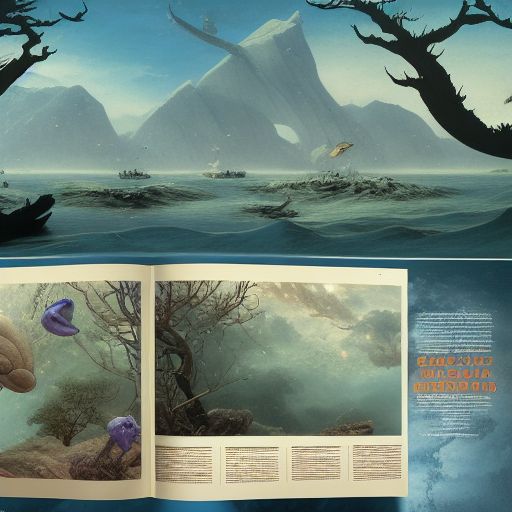
Architects and designers are increasingly experimenting with AI generated art and designs. Michael Arellanes II of MA2 Studio created a series called ‘Synthetic Futures’ in which he experiments primarily with Midjourney in an attempt to create a consistent and controlled aesthetic for architecture.
I personally think wide-scale use of AI based art generation to continue a theme or even explore and create new ideas/directions is a foregone conclusion at this point. I’m continually astounded by the results these algorithms generate. Results that will just get better very quickly.
Arellanes seems to agree when he says:‘The current open platforms for AI imagery work from word descriptions alone, as opposed to architectural 3D modeling and/or encoding surface parameters. This leaves the operator with flat images or AI impressions based on descriptions with extraordinary results of the unexpected. The unexpected results are the most exciting aspect of this new paradigm. As designers test the limits of AI’s imagination and complex image compositions, new possibilities emerge that have never been seen before.’
AI generated art has caught fire. Learning how to generate the command line prompts to generate the art is still a work of trial and error. But some folks are helping you learn by giving some example prompts to help you learn what works and what doesn’t.
All the below items were 100% auto-generated and included on the page. It looks like people are exploring and sharing different prompts to generate different kinds of art.
Using online AI art generation sites like DALLE, Midjourney, and GPT-3 aren’t free or unlimited to most folks. For example, DALL-E 2 was charging 10 cents per prompted generation attempt. Trying a few hundred prompts can quickly add up. Even using free generators like Stable Diffusion, experimenting with prompts can be time consuming.
It only makes sense we’re witnessing the rise of specialist prompt writers and online marketplaces where you can buy and sell high-quality prompts that get the desired results much faster. This saves users money on API fees and time trying to tune the prompt to get what you want.
These even have names now. A prompt engineer is a specialist adept at writing the text prompts necessary for an AI model to generate reliable outputs (such as graphics, text, or code) at a reasonable price. They can then sell the specialized prompts they generate on a prompt marketplace. These are sites where users can purchase and sell prompts. The prompt maker usually keeps 80% of the sale, and the marketplace takes a 20% cut.
Below are some of the top paid Prompt Marketplaces. Definitely worth browsing to see the amazing work that can be generated by AI art algorithms.
PromptBase– offers an amazing amount of prompts for just a few dollars:
PromptHero – seems to be geared towards higher-end generation
Coperni at the Paris fashion showed off a spray-on dress that uses synthetic fibers suspended in a quick drying/evaporating polymer solution.
While some people are calling it “fashion history” others point out there’s really not a lot of new tech or ideas here. Fiber infused spray-on coats like this have existed for decades and painted body costumes have been around a long time. This is very much like how paper has been made by interlacing and drying wood fibers into a solid sheet. It is an interesting development to see at something as high-class as Paris Fashion week. Supposedly the dress could be re-used, but I wonder how easily one could get in/out of it without tearing it. I would guess they might even be able to repair tears with just a spray touch-up to fill the gaps with new fiber.