Fascinating analysis
A fascinating analysis of 4 myths surrounding profile pictures. Lots of really interesting data/charts on the subject…

http://blog.okcupid.com/index.php/2010/01/20/the-4-big-myths-of-profile-pictures/
A fascinating analysis of 4 myths surrounding profile pictures. Lots of really interesting data/charts on the subject…
http://blog.okcupid.com/index.php/2010/01/20/the-4-big-myths-of-profile-pictures/
Been a busy week for the project I’m helping with, Project Offset:
After a early drop of information here:
Article: http://ve3d.ign.com/articles/news/53216/New-Project-Offset-Tech-Demo-Trailer-Released
Movie: http://www.youtube.com/user/intelswnetwork
Yesterday Offset then gets on the frontpage of Slashdot: http://games.slashdot.org/story/10/02/22/2312200/Real-Time-Movie-Quality-CGI-For-Games
Or you can see it straight from their site here (you’ll find me on the Meet the Team page if you need proof)
http://projectoffset.com/
“Historically, the Standford computer science department accounts for between 20 to 60 percent of all honor-code violations, even though the courses represent about 7 percent of student enrollment.”
I wonder if it’s because it’s easier to ‘cheat’ (ie copy source code) in CS, the pressure to perform is higher, CS students are inherently full of cheaters, or if in fact most majors actually have this much academic dishonesty – and it’s the uniqueness of CS assignments makes it easier to catch. I also wonder if this is a sign/fallout from our declining educations in math and sciences…
CS homework involves lots of your own creative problem solving. In CS, you can get a proper solution in many different ways – so the odds of reaching the right answer by the same method as someone else is very unlikely. Compare that with other majors. Mathematics, chemistry, physics, and like majors don’t usually have multiple ways to the right answer – they pretty much require you reach the answer in a certain way – so having the same steps to a solution as someone else is actually likely and expected. Then go to the other extreme of most liberal arts majors. Besides having multiple ways to get a working solution, these majors often don’t even have a particular ‘solution’ to their assignments – with the point of the assignment being simply to show critical thinking and defend your answer.
CS majors are a ripe target – these guys have a huge database of previously submitted work from other students and from open web resources that can easily and automatically checked against. No wonder they get caught so easily. Still, it would be interesting to run one of these pattern matching programs against other major’s assignments and compare to previously submitted papers and online resources such as wikipedia and the like for copying. Could be an interesting experiment…
“You cannot help the poor by destroying the rich. You cannot strengthen the weak by weakening the strong. You cannot further the brotherhood of man by inciting class hatred. You cannot build character and courage by taking away people’s initiative and independence. You cannot help people permanently by doing for them what they could and should do for themselves.”
Good for a chuckle
Just finished a good book by one of my favorite actors:

Couple of interesting tidbits:
He left high school with little direction and entered the merchant marine as a cook since his eye disqualified him from war service. After a year and a half in the Merchant Marine, he returned to Hamilton College and also attended the University of Wisconsin. He transferred to a school in New York City, where he got a bachelor’s degree in literature and political science – for no apparent reason other than he liked to read. He then traveled to France to meet up with a girlfriend, and when Yugoslavia revolted from Russia, they ran down on a whim and helped build a railroad in Yugoslavia for six months.
The relationship on the rocks, he returned to New York, enrolling at Syracuse University, where he obtained a masters in public administration. It was a new program designed to train future workers in the federal bureaucracy, a career that he said he had “no interest in and no aptitude for.” He applied for a job with the CIA on a whim from his helpful instructor, but didn’t even make it through the first screening because of his membership in a union while serving in the Merchant Marine, his work in Yugoslavia and his other wanderings.
He then became a management analyst with the Connecticut State Budget Bureau as an efficiency expert. He joked about being so efficient he actually showed up at the post office by mistake on his first day. He hated his day job so much that he lived for each night of acting at local shows – until he finally quit and went for acting full-time.
Finished another good book by Chuck Palahniuk

A good collection of short essays and stories, but one of the best was a commentary on how people meet in airport hotel conference rooms and sometimes pay up to $100 for 7 minutes to ‘sell’ their stories to a publisher/filmmaker/producer/etc and he makes an interesting social commentary on our times. One that I think hits some very interesting and uncomfortably true points. A better description of our times I haven’t seen – or at least of GenX-er’s.
Paraphrased, his argument runs like this:
We are now a society that has: unprecedented amounts of free time, the technology to publish/be seen rapidly and cheaply, educated enough that literacy is available to almost everyone, and enough disgust to say that we can do better than the books/movies we see. Along with free time, we take more time to relive, reorganize, sum up, and make little internal or external ‘highlight’ reels to remember all those memories and events in our lives. Everything from our growing up family life, to horrible experiences like alcoholism or worse. We package them up in a screen play or book – which our disgust tells us is often just as good or better than what we see already. With all this in play, he asks if we are headed down a road towards mindless, self-obsessed lives where every event is reduced to words and camera angles? A world in which we review our lives, not as Socrates intended as a growing event – but only in terms of movie or paperback potential. Palahniuk goes one step further and suggest – we may even start picking experiences in order to generate a story.
A world in which the experience happens in order to generate a story. Where the story you can tell is actually more important than the actual event. Where we hurry through life, enduring event after event in order to build a list of experiences. The problem is we may never even really be touched by the events if we live this way – we might experience them, but not actually grow or mature because of them.
He ask if folks will start actually picking and choosing our way through life so-as to make the most cool sounding character. To live a life that we’d see played by Julia Roberts or Brad Pitt. We may only see the world’s experiences as what Heidegger called bestand – raw natural materials like wood/oil/clay. The problem is that Heidegger said that if you start seeing the world as bestand – then it leads you to use things, enslave and exploit things and even people for you own benefit. Or even to enslave and exploit yourself.
So, is it happening?
I’d have to say that this somewhat happened to me in my 20’s during the dot-com boom. I had an image of what success looked like in my head that I’d formed in college and with the dot-com raging – money flowed like water. I aimed for that. I got the good job in my field, the right fun activities that were cool (like snowboarding, etc), living in the right part of the country (Oregon is a magnet for this), traveling to Europe and New Zealand, searching for the right crowds to hang out with and so forth. It wasn’t until I attained those goals that I realized that they weren’t necessarily ‘me’. Oh, parts of them were and many were very good for me, but parts were not.
It wasn’t until I dug into my motives for acquiring or participating in these events, it often uncovered that it was sometimes me trying to impress myself or someone else in my mind. Another might even be to impress or mimic famous people we idolize or want to pattern our lives on – like movies/sports/music stars, or historical figures. Sometimes even fictional people I projected or created. You were secretly trying to impress a parent(s), or someone that said you’d never make it, or classmates in school you hated and wanted to show them. You might even play out the dialog in your head and come up with your retorts. But in short – it is to fill your own void.
I think much of our generation – despite claiming we’re all so independent – wastes a lot of our younger years trying to be something or someone we’ve invented in our heads. So much so that we don’t get down to the somewhat scary, but really wonderful, stuff of finding out who we really are in ourselves. It wasn’t until I started really being comfortable and confident with my own faults/reality of myself that I was able to let that person start to blossom when I went to the seminary/monastery – and stopped needing to live up to whatever thing was in my head telling me what I should be. Instead, I can now let go of all that, and just simply live as I am. And that’s a truly unique, wonderful, and free place to be – but can be very different than the person we think we are, or wanted to be.
As a final note, that discovery of who I am, for me, is intrinsically linked with my faith. For my faith reminds me constantly of how loved and beautiful I am – even if I’ve made terrible mistakes or don’t measure up to my own internal yardstick. That my past and even current fallacies – while they may have shaped me – does not have to be who I am or discount from what I was always meant to (and hopefully one day will) be – a pure person of light and love. And if I don’t live up to my internal yardstick, then I can rely on the fact I have, or will be given, everything I really DO need.
Here’s a pretty good summary of what we’ve been up to – and since it happened in a public forum, you can see it. I actually helped Tom with some of the lock-less algorithms he describes around 1:12:50
Slides:
http://www.stanford.edu/class/ee380/Abstracts/100106.html
Video:

http://ee380.stanford.edu/cgi-bin/videologger.php?target=100106-ee380-300.asx
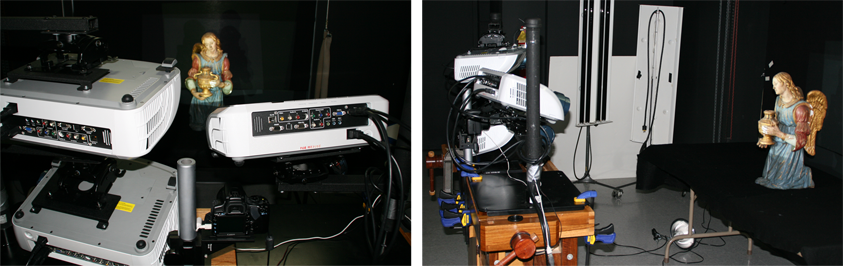
Fascinating idea from the Computer Science guys at Purdue.
Instead of doing expensive and dangerous chemical restoration on art, you use this completely non-evasive method. A 3D image of the object is acquired. One then calculates how the restored item is supposed to look (filling in paint gaps/color correction/etc), and this program controls projectors that projects the color and image correction back onto the object via off the shelf digital projectors. Fascinating!

Sweet – and horrifying.
Current tally: $39,000 per citizen (every man/woman/child), or currently $111,500/taxpayer – meanwhile savings are at $1300/citizen. This means that if we accrued absolutely NO more debt, bought nothing else, and just put our total earning towards paying for the debt, most people would have to work 2-5 years towards paying off just their part.
You tell me if we’re in trouble…
