Halloween!
Had some great fun giving candy out to the kiddies in the neighborhood. Also put up my usual window display – which got rave reviews!
Had some great fun giving candy out to the kiddies in the neighborhood. Also put up my usual window display – which got rave reviews!
Sometimes more really isn’t the answer.
Case and point – dishes at your house. I saw this picture and college days of yore flooded back:

At one bachelor flat I lived at – our sink often looked like this. We had 4 guys living in one house, and dishes weren’t a high-priority item. So, they tended to pile up and then nobody seemed to remember who dirtied what and an endless cycle of blame and avoidance resulted.
The solution: throw out all the extra dishes. Instead, there was *exactly 1* set of silverware, plate, and glass for each person. Further, each one was color-coded. Red plate/cup/silverware was Bob’s. Green was Fred’s, etc. That meant if you wanted to eat something, then you had to have washed your stuff to do so. It also meant if you left your dirty dishes around – the culprit was immediately identifiable. The first benefit was that with only 4 plates in the house, a ‘pile’ of them never got very big. The second was that very quickly the innocents were vindicated, and slobs were identified. (We still had a full set of ‘nice’ dishes for when people came over for a dinner – but they were in a separate cupboard. Anyone seen using those individually would be berated furiously). The system worked like a charm and there was nary an argument about dishes for the rest of the time I lived there.
I think this is a corollary to many a home-owner’s observation that your possessions naturally expand to fit the space you have. Or maybe Apple’s design philosophy that sometimes its the limitations you put on the usage of the device that actually allow easier and higher functionality.
As someone who’s recently experienced the event, here’s a couple great sites with free stuff you can get on your birthday:
Portland specific stuff: http://portlandonthecheap.com/birthday_perks.html
More universal: http://www.heyitsfree.net/2006/10/03/birthday-freebies/
Even though DisneyLand isn’t doing their ‘free ticket on your birthday’ thing anymore, there are plenty of other great deals. Some of the better ones:
Sweet! Let the birthday fun begin.
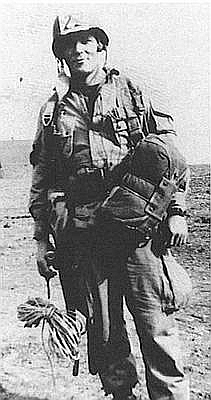
Major Richard Winters, commander of Company “E”, 2nd Battalion 101st Airborne during World War II and the character who was the basis of the Band of Brothers series, died this Jan 2nd, 2011.
I personally found the Band of Brothers series to be one of the best war-based TV series created in recent years; and Winter’s successful assault on the fortified gun positions at Bercourt Manor (that was depicted in tremendously accurate detail in Episode 2 – Day of Days) during D-Day landings launched him into near instant fame. He continued on up the ranks during the war because of his excellent tactical and personal leadership. The assault was featured as a major part of one of the Band of Brothers episodes which had a nearly exact re-creation of the events and assault. The assault was so well executed and planned that it’s still studied in West Point as a textbook study in how to attack a fixed position. This assault even made it into mods for various FPS games and it even became an official mission in the Call of Duty series.
I was intrigued to find out what the strategy was, but could not find any details of the actual tactics. Well, look no further. I finally found a site that shows the step-by-step account of the attack. Here is the detailed flow of the assault in very easy to follow diagrams. It appears that site is not being maintained and increasingly broken, so I’ve copied it below.
Personally, I’m continually amazed by a dichotomy of reading about combat tactics and the reality of the performing them on the ground. While these situations are studied from perfect aerial views with everything clearly marked, the reality is that everything is seen and evaluated at ground level. A great tactician has to survey covertly without being spotted, without knowing anything about hidden emplacements, without being able to see actual numbers, and usually with only partial views with key pieces blocked by obstacles. He must have an intimate and cold evaluation of his mens’ training and weapons’ capabilities. He has to gather this information while laying in mud or thickets – sending men around only so far as they can recon without being seen. This soup of input is then processed and a plan churned out instantly; often in the heat of battle. As the assaults progress, they must re-evaluate and keep moving very quickly using tactics of misdirection and hitting positions before they can re-adjust to the assault. As an avid player of FPS tactical games like Counter-Strike, I see how this is like poetry in motion when you get hooked up with a good team that can sense the shifting positions and anticipate counter-assaults. They know when to rush and when to shift. I find this an amazing skill; and one I’ve always wanted to learn more about.
To see how this looks in action, I present to you the Assault on Guns at Brecourt Manor as shown in Band of Brothers Episode 2 (note: these videos sometimes break if they get copyright takedown notices – just search for the title on YouTube and you’ll find others).
Below the videos is the battle flow diagrams.
<edit June 11, 2022>
Also, there are a number of videos made about the assault on YouTube as well.
Major Winters talks about the assault:
Review on the site and flow of battle at the actual location:
Bill Gaurnere revisits Brecourt Manor
Here are the charts, since the original link seems to be falling apart.

After a night of havoc with sporadic contact with the enemy, Lt. Richard Winters, Easy Company (506 P.I.R.) managed to collect some of his men and men from other companies. He had landed on the northwest corner of Ste. Mere Eglise and steadily made his way, picking up others, to the east towards the beaches and then south. Eventually he assembled with larger numbers, and moving southward from Le Grand Chemin enemy contact was made; just south of Le Grand Chemin and north of Brecourt Manor a battery of 105 mm guns was shelling Utah Beach. Without realizing most of E Company was still making its way to the assembly point, Lt. Winters was ordered “to take his men” and knock out the placement. Knowing little more than the placement of a machine gun and one artillery piece, Winters and his force of 12 men moved south (Koskimaki, 230 – 231). On scouting the area, Winters found that there were actually four 105 mm guns connected by a trench network and defended from a distance by a collection of German MG42 nests.


Upon arrival to close proximity to the battery, Lt. Winters set up two 30-caliber machine gun positions to act as bases of fire. Pvts. Joe Liebgott and Cleveland Petty were assigned one position, while Pvts. John Plesha and Walter Hendrix manned the second. Sgts. Mike Ranney and Carwood Lipton were sent northwesterly (past the old truck and rubbish pile) to establish covering fire as well. Lipton, with limited visibility, climbed a tree for a better view, but in an exposed position. Sgts. Bill Guarnere and Don Malarkey accompanied Lt Buck Compton down the tree line in a flanking position of the German MG42 nest.

Pvts. Joe Liebgott and Cleveland Petty were given the order to commence firing. Lipton and Ranney also began harrassing fire from the tree position. Meanwhile Compton, Malarkey and Guarnere were in position to attack from the German machine gun’s right flank…

…from the gun’s right flank they threw grenades and began charging in thus knocking out the MG42. Lt. Carwood Lipton later recalled, “And then, just like in the movies, I saw Compton and Guarnere running in and throwing grenades with almost every step.” (Koskimaki, pg. 230)
Winters, along with his group (1) then charged along the tree line then out through the field to the trench system. The Germans in gun position one were overwhelmed…

…and abandoned the first gun position. What German infantry was left retreated south in the trench system towards the next gun and south across the field towards Brecourt Manor only to be fired on in the open. Contrary to the HBO series depicting Lorraine has having trouble hitting a retreating German, it was Bill Guarnere who actually missed his man. “Guanere missed the … Jerry, but Winters put a bullet in his back. Guarnere followed that up by pumping the wounded man full of lead with his tommy gun.” (Ambrose, 98)
The assault team now began to take fire from a line of MG42 nests located in the hedges to the west and southwest. Additionally the Germans in the next gun position began to fire and throw grenades. It was here in the north end of the trenches, as gun one was taken and about to be destroyed, that Popeye Wynn was injured by grenade, and Joe Toye had two close calls.

With the first gun under control, the attack on the second gun was put into place, but Winters, sensing a counterattack, checked the trench system. “I flopped down and by lying prone I could look through the connecting trench to the next position, and sure enough there were two of them setting up a machine gun, getting ready to fire. I got the first shot in however, and hit the gunner in the hip. The second…in the shoulder.” (Koskimaki, pg 232)
The MG42 fire from the west across the field was almost non- stop at this point, so all activity was limited to a crouch in the trench system. Lipton made his way up to the first gun only to discover that he had left his musette bag with explosives behind. He left, as ordered, to retrieve his bag.
Winters now ordered the assault on the second gun. Leaving three men on the first 105, Winters led five others in a charge on the gun. With only one casualty the gun was taken (Ambrose 100). It was at the second 105 position that Winters discovered the radio and map room. This was an important find, as the maps contains locations of every German battery on the Contentin Peninsula. Winters ordered the radios and remaining materials destroyed.

With two guns under their control, Winters ordered the four machine gunners forward to suppress the MG42 fire from across the field. The team was joined by Pvt. John D. Hall of A Company. Hall led the charge on the third gun but was killed. However, the gun was taken (Ambrose, pg. 100). Captain Hester, S3, then joined the team, bringing with him incendiary grenades. Winters ordered all the captured guns destroyed.

Five more men, led by Lt. Ronald Spiers of D Company, arrived to reinforce the effort. Speirs led the assault on the fourth and final gun. The gun was taken but not without the loss of one man, “Rusty” Houch of F Company (Ambrose 101). All guns were now capture and effectively put out of operating order.

With all guns captured and destroyed, Winters ordered a fallback to the original starting point and subsequent retreat to Le Grand Chemin.
Conclusion
“Winters’ casualties were four dead, two wounded. He and his men had killed 15 Germans, wounded many more and taken twelve prisoner; in short they had wiped out the 50 man platoon of elite German paratroops defending the guns, and scattered the gun crews” (Ambrose, pg. 102)
For their actions, Lt Richard Winters received the Distinguished Service Cross, while Compton, Guarnere, Lorraine and Toye received the Silver Star; Lipton, Malarkey, Ranney, Liebgott, Hendrix, Plesha, Petty and Wynn received the Bronze Star (Ambrose, pg. 104).
Permanent magnet that is turned on/off by a knob, transparent concrete, bendable magnets, temperature-changing colored glass? All sounds like science fiction to me. But it’s NOT. Actually BUY these items today:
Tis the season for giving. I’m a fan of charities, and regularly set aside 10% of my income for charitable giving. But how do you check to see if that guy standing on the street corner is a *real* charity; or if that charity actually will get the money to those in need? After Bono’s ONE charity scandal this year, we are learning how to be more careful with our giving:
According to New York Post investigation of tax records – of the just under $15 million that U2 singer Bono’s ONE charity collected in 2008 – only $184,732 was distributed to actual aid organizations. $8 million went to executive pay and most of the rest went to ad agencies for promotions.
Turns out that the Oregon Department of Justice allows you to look up the records of your favorite charity to see if they actually *are* a charity, and also to see exactly how much of that money they’re gathering is actually going to the cause; and how much of it’s going into their own pockets. To be considered a charity, a charity cannot have over 35% of their money going to ‘administration’. While 35% is still a huge amount of potential abuse IMHO, it’s the law at the moment and I can understand it for some particular causes. My own take is that the charities I give to are in the 10% or less in overhead category (90%+ going to actual programs).
While not an exhaustive list of dubious charities, the official Top 20 worst charities in Oregon for 2010 are mind-numbingly bad with about half of them under 20% going to actual programs/aid.
Here’s the list with the percentages of how much goes to their actual activities. In order for them to be considered in accord with a non-profit, these numbers need to be 65% or HIGHER. I encourage you to check out your charity, and give to those that will do the most good with the money you give.
Shiloh International Ministries 3.63%
Purpose: To provide medical necessities and moral support to needy children and to
provide assistance to the homeless
Law Enforcement Education Program 6.26%
Purpose: To educate teenagers on the effects of alcohol
Korean War Veterans National Museum and Library 7.03%
Purpose: To preserve a record of participation in the Korean War, educate the public, and to promote friendship among vets
Foundation for American Veterans, Inc. 10.22%
Purpose: Promoting social and recreational welfare for current and past U.S. Armed Forces members, dependents, widows, widowers and others
Dogs Against Drugs/Dogs Against Crime 10.30%
Purpose: Drug Education and Crime Prevention
National Vietnam Veterans Foundation 10.92%
Purpose: Support of Veterans Organizations
Firefighters Charitable Foundation 11.09%
Purpose: To provide financial assistance to individuals affected by a fire or disaster
Committee for Missing Children 11.51%
Purpose: Distribution of photos of missing children, education and case management, and the development of an international database
The Wishing Well Foundation 11.57%
Purpose: Fulfilling the fondest wish of any terminally ill child not expected to reach 18 years of age
Law Enforcement Legal Defense Fund 13.16%
Purpose: To provide legal assistance to law enforcement officers
Disabled Police Officers of America 14.24%
Purpose: Educational Programs for Police Officers
Disabled Police Officers Counseling Center, Inc. 14.84%
Purpose: Assist disabled police officers
Foundation for Children with Cancer (formerly Reach Our Children) 15.23%
Purpose: To provide financial assistance to families with children with pediatric cancer
American Medical Research Organization 16.19%
Purpose: To support medical research in the cause, cure, and treatment of macular degeneration
National Veterans Service Fund, Inc. 20.44%
Purpose: Inform and educate in conjunction with service-related illnesses and work to raise public awareness of the contributions veterans make to our society
Children’s Leukemia Research Association, Inc. 20.49%
Purpose: To support research efforts into the causes and cure of leukemia and to provide assistance with expenses incurred in leukemia treatment
Dakota Indian Foundation 21.55%
Purpose: Assist in education of Indian people and preservation of Native American culture
Cancer Support Services 22.27%
Purpose: To support the charitable mission of Cancer Fund of America and to provide financial support to indigent cancer patients
Project Cure, Inc. 24.28%
Purpose: Increasing public and professional awareness about the prevention, detection, and treatment of various chronic diseases
Operation Lookout National Center for Missing Youth 24.53%
Purpose: To provide free services 24 hours a day 7 days a week regarding missing youth
Got up a touch early to take this (yes, got the date wrong on-cam, it was Oct 29th, 2010)
What a cool chair.

Each stool is designed with a unique series of random triangles generated by an algorithm, then the wood is cut using a laser and all the triangles are joint together with cable ties.
triangles stool from Riccardo Bovo on Vimeo.
I have loved Van Gogh’s paintings ever since I saw the actual “Starry Night” when it was in Chicago about 10 years ago. His stuff blew me away because the pictures in books I’d seen didn’t do justice to the real thing at ALL. The paint is glopped on in HUGE daubs in some places while the white canvas shows through in other spots. He layers the daubs so when he brushes through them, the underlying colors come out too. It’s 3D, it was so creative, so amazing.
Anyway, long has there existed the novel effect of tilt-shift photography. Normally this is the exclusive realm of those with an appropriate $1800 lens (depending on the aperture). But now, you can use a simple Photoshop technique to generate the same effect yourself on any photo you’ve taken.
So, someone used this Photoshop technique on Van Gogh paintings, and HERE were the incredible results

Perhaps I should try it on some Monet or Klimt….